
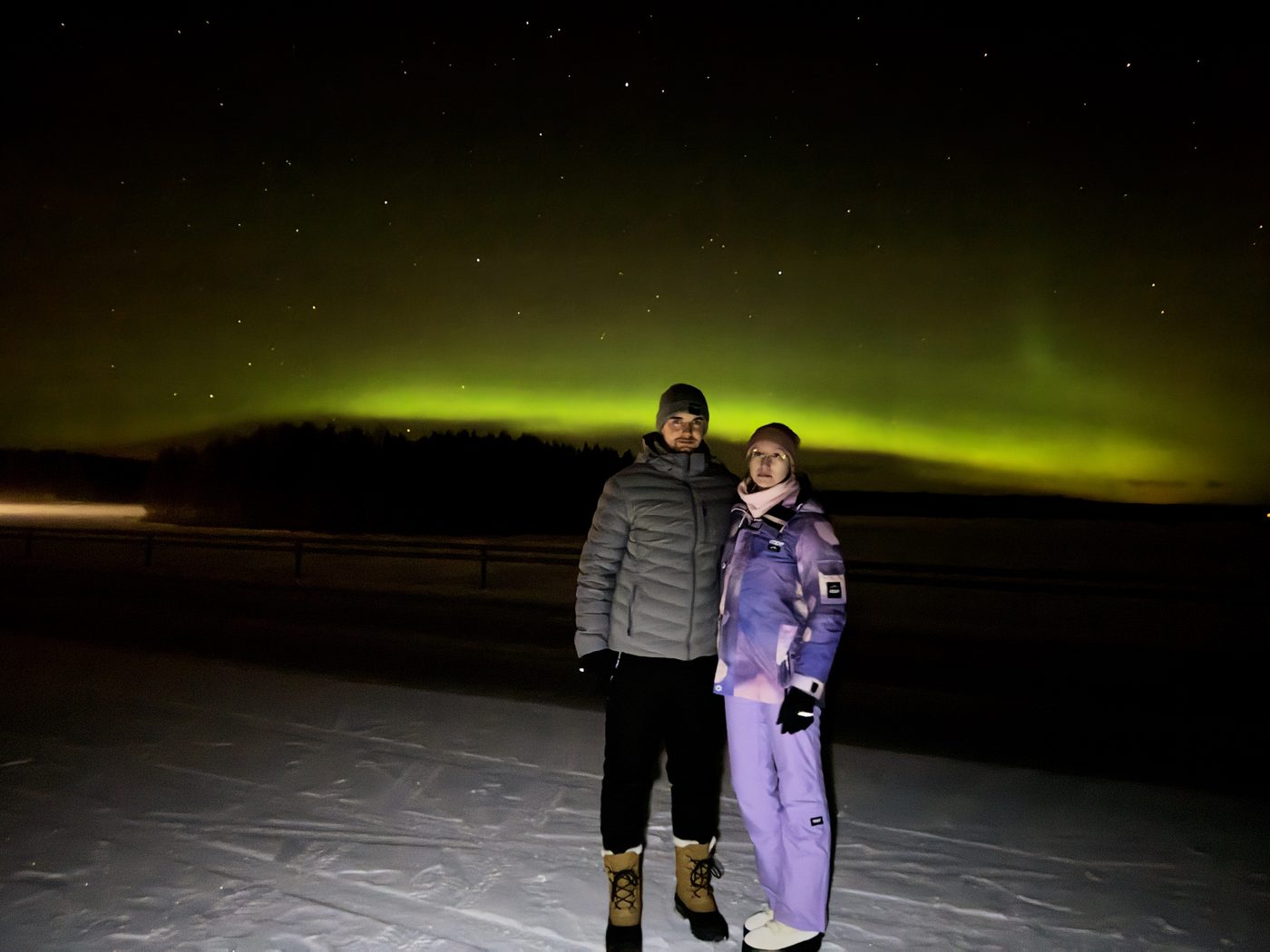
The honest answer to “when should I go?” — how darkness, weather and the solar cycle line up across the Lapland aurora season, and how to plan a trip that actually delivers.
If you only remember one thing, make it this: the Northern Lights are visible in Finnish Lapland from late August to early April, and the single biggest factor in whether you see them is not the month — it is how many clear, dark nights you give yourself. Everything below helps you stack the odds, but multiple nights is the real strategy.
The season, month by month
Late August–September: the first properly dark nights return and the lakes are often still unfrozen, giving mirror-perfect aurora reflections. Mild (around 0–+5°C) and comfortable for long evenings outside, with an equinox lift in activity.
October–November: snow settles in, nights lengthen quickly, and October historically carries some of the season's better geomagnetic odds. A quieter, well-priced time to travel before the Christmas rush.
December–January: maximum darkness — up to 18–19 hours a day, so the aurora can appear from late afternoon. This is peak winter, with the full sweep of huskies, reindeer, snowmobiles and glass igloos, but also the coldest (−15 to −25°C) and busiest stretch.
February–March: many guides quietly consider this the best all-round window — deep reliable snow, lengthening but still-dark evenings for daytime activities, and the spring-equinox bump in activity. Skies are often crisp and stable.
Early April: the season winds down as the nights brighten; by mid-month the window has effectively closed until autumn.
Why Lapland specifically
Finnish Lapland sits inside the auroral oval — the ring around the magnetic pole where activity is densest — so the lights can appear on quiet nights that would show nothing further south. Just as important, the interior has a dry, continental winter: less cloud and precipitation than coastal aurora regions, and vast, dark, sparsely populated wilderness with almost no light pollution. It is one of the most statistically reliable places on Earth to see the aurora.
Peak season vs. shoulder season
Peak (December–February) buys you the longest darkness and the postcard winter landscape, at the cost of the coldest temperatures, highest prices and most company. Shoulder season (September and March) often runs 20–30% cheaper, with milder weather and longer, more flexible days — and the aurora is every bit as active. For first-timers who want both comfort and a strong chance of a sighting, March is our most-recommended compromise.
Time of night, and the solar cycle
On any given night the statistical peak falls roughly between 9pm and 1am, when your location rotates under the most active part of the oval — though a strong storm can light the sky at any hour. Zoom out and the Sun's eleven-year cycle matters too: it peaked in the mid-2020s and stays elevated for years either side, making recent and upcoming winters unusually strong for aurora travel.
How to actually plan it
Give yourself at least three nights in the aurora zone — a single night is a coin toss, while three nights carries a high chance of at least one clear display and five makes a miss unlikely. Base yourself somewhere with dark surroundings, keep your evenings flexible so you can go out when the forecast turns favorable, and consider a guided hunt that will drive to clear sky rather than waiting under cloud. That combination, not a magic date, is what sends travelers home having seen the lights.